9 Productivity Questions People Secretly Ask AI (And What Actually Works)
March 4, 2026
9 Productivity Questions People Secretly Ask AI (And What Actually Works)
If you look at what people ask AI tools about productivity, certain questions come up again and again. Underneath the search queries and late-night prompts is a common feeling: I know what I want to accomplish… I just can’t seem to get organized enough to do it.
AI can give advice. But advice alone rarely fixes the problem.
What actually works is clarity; seeing your work, priorities, and commitments in one place.
Here are nine productivity questions people secretly ask AI (and what actually helps in real life).
1. How Do I Stop Procrastinating?
This is the heavyweight champion of productivity questions. But procrastination usually isn’t laziness, it’s overwhelm. When everything feels equally important, your brain avoids starting anything at all.
What actually works: Start smaller than you think.
Write down the top three priorities for the week and ignore everything else until those are moving forward. Many professionals find it easier to begin when their priorities are already defined visually.
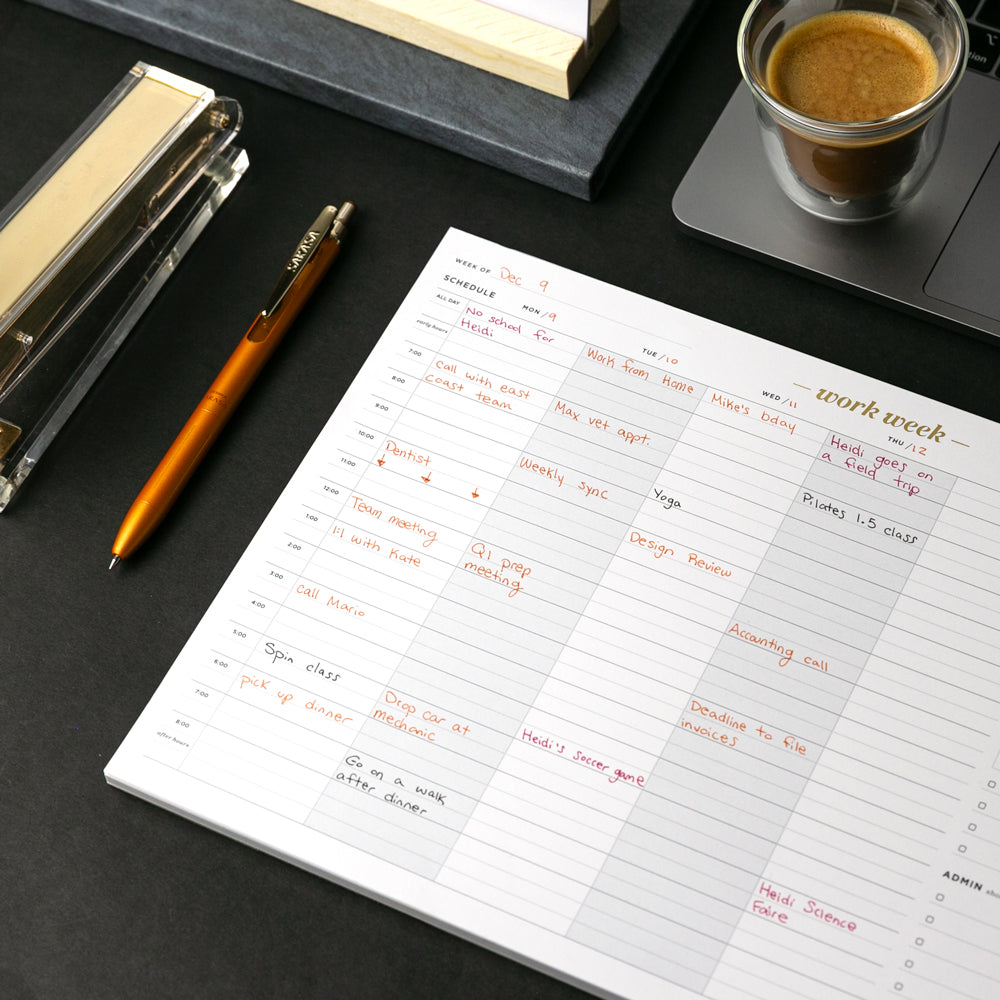
Tools like the Ink+Volt Dashboard Deskpad help by forcing clarity upfront. Your weekly priorities live right at the top of the page, making it easier to start instead of spinning your wheels.
“A year from now you may wish you had started today.”
Karen Lamb
2. How do I manage my time better?
Most people aren’t bad at time management, they’re bad at time visibility. Work often lives in scattered apps, sticky notes, email threads, and half-remembered conversations.
What actually works: A single view of everything you’re responsible for.
When tasks and projects are gathered in one place, it becomes much easier to understand what actually needs your attention. Instead of jumping between tools or trying to mentally track everything, you can see priorities, projects, and next steps at a glance. That kind of visibility reduces context switching and makes planning your week far simpler.
3. How do I stay focused?
Focus isn’t just about discipline. It’s about reducing mental switching. Every time you jump between tasks, tabs, or projects, your brain pays a cognitive tax.
What actually works: Working in defined focus blocks tied to specific priorities.
With the Dashboard Deskpad, your key tasks are already grouped by focus area. Instead of asking “what should I do next?” you simply move down the list for that project. Less deciding. More doing.
4. What's the best productivity method?
Pomodoro. Time blocking. Getting Things Done. The 5AM club. Most people try multiple systems hoping one will finally make productivity feel easy. But systems only work if they’re simple enough to stick with.
What actually works: A flexible framework that adapts to your real week.
Instead of forcing yourself into a rigid productivity method, it’s more effective to use a simple structure that helps you see priorities, organize tasks, and plan your week clearly. The best systems leave room for different working styles, whether you prefer batching tasks, or simply tackling your most important priorities first, helping you stay organized without overcomplicating the process.
5. How do I prioritize?
This question shows up constantly in high-pressure jobs and fast-moving teams. When everything is urgent, decision fatigue kicks in.
What actually works: Choosing priorities before the week begins.
Setting a weekly theme and your top 3 priorities helps filter what truly matters from what just feels loud. The Dashboard Deskpad’s weekly overview is built for this exact moment; helping you define the outcomes that actually move projects forward instead of reacting all week long.
6. How do I avoid burnout?
Burnout rarely comes from working hard. It comes from working without boundaries or closure. When your tasks feel endless, your brain never fully relaxes.
What actually works: Seeing progress clearly.
Keeping a visible record of what you’ve accomplished over time helps create a sense of completion. When you can look back at finished priorities, completed tasks, and progress across weeks, it becomes easier to recognize how much you’ve actually moved forward. That perspective can be surprisingly powerful in preventing the feeling that work never ends.
7. How do I build better habits?
Morning routines. Workout plans. Daily journaling. Most people fail at habits not because they lack motivation but because they forget to track them consistently.
What actually works: Daily visual tracking.
The Dashboard Deskpad’s Daily Tracker helps you monitor routines and habits across the week, making it easier to stay consistent without opening another app. Sometimes the smallest systems make the biggest difference.
“We are what we repeatedly do. Excellence, then, is not an act, but a habit.”
Will Durant
8. How do I run better meetings?
Shorter meetings. Clear agendas. Fewer follow-ups. Meetings feel frustrating when no one leaves with clear next steps.
What actually works: Capturing action items immediately and assigning them to projects.
The key is recording tasks while the conversation is happening and placing them where they belong in your workflow. When action items are clearly documented and connected to specific projects or responsibilities, nothing gets lost after the meeting ends. Good meetings finish with defined next steps, not vague intentions.
9. How do I balance work and life?
Work creeps into evenings. Evenings creep into weekends. Balance isn’t just about time; it’s about mental closure.
What actually works: Ending the week with a clear understanding of what’s done and what’s next.
Because the Dashboard Deskpad shows your entire week at a glance, it helps create that sense of completion. You can wrap the week knowing what moved forward and what will wait until Monday. That clarity makes it easier to step away.